You can be confident that IVHQ are a professional and well organized volunteer organization. They are the only organization I would volunteer through. They look out for your safety and best interests from start to finish.
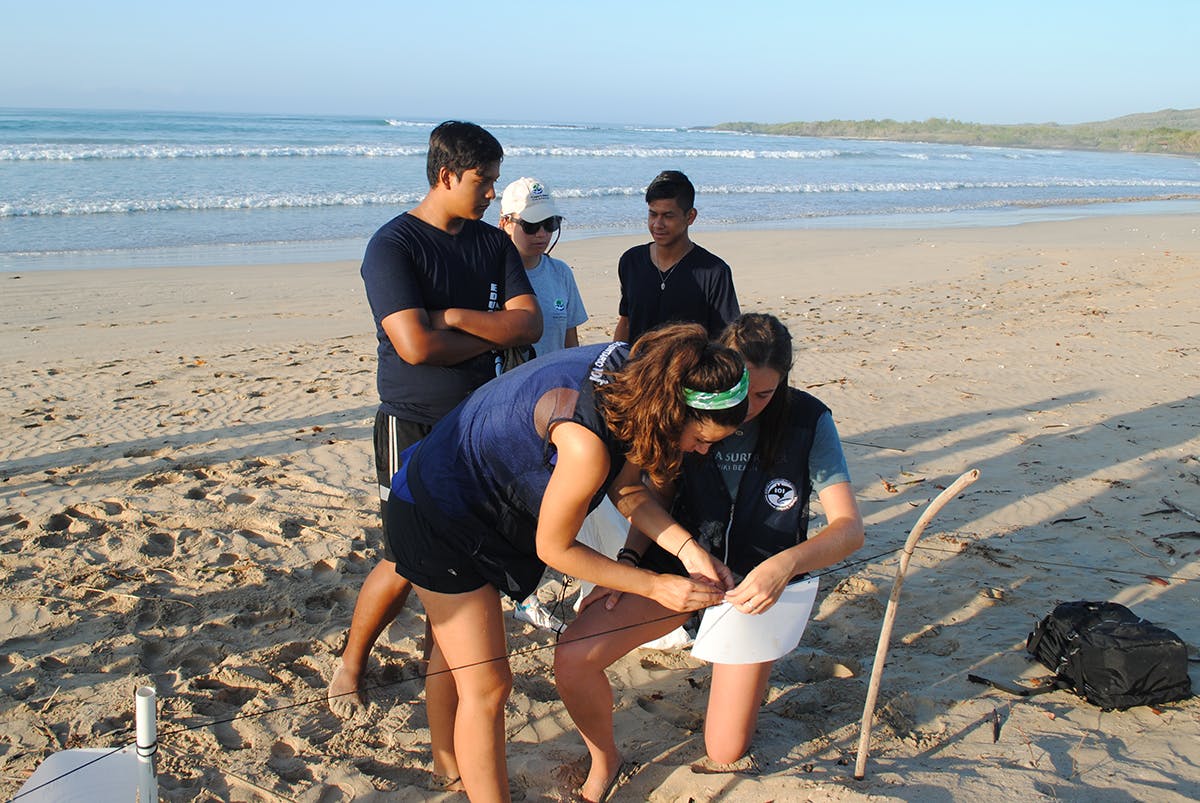
Sea Turtle & Marine Iguana Conservation Volunteer Project in the Galápagos Islands
Purpose
Conserve endangered reptile species
Start dates
Programs start every Monday
Duration
Choose from 2-12 weeks
Volunteer hours
5 to 6 hours a day
Age
18+ (or 12+ accompanied by a guardian)
Accommodation
Homestay

Who is going?
Group video calls
Once you have secured your place, join regular video calls to meet your Program Manager and other volunteers before your trip.

This program is ideal for:
Wildlife lovers and conservation volunteers who want to help protect endangered sea turtles and Galápagos marine iguanas. It suits people with a high level of fitness who enjoy being outdoors and don’t mind early mornings, late-night beach patrols and long walks. You’ll gain field experience in marine wildlife research on Isabela Island.
Project details
IVHQ’s Sea Turtle and Marine Iguana Conservation project puts you on the beaches of Isabela Island, helping protect two of the Galápagos Islands’ best-known marine reptiles. The project is based in Puerto Villamil, the small coastal town on Isabela’s south coast.
Volunteers patrol nesting beaches, monitor sea turtle nests and observe the Galápagos marine iguana, the world’s only marine lizard, in its natural habitat. Your data helps researchers track population trends and protect both species over the long term.
This is a seasonal project. It runs from January through the end of June, covering the nesting and hatching seasons for both species. If you want to volunteer in the Galápagos with marine wildlife, plan your dates inside this window.
What to expect and how you'll make an impact
The Galápagos Islands are home to green sea turtles and Galápagos marine iguanas. Green sea turtles come ashore on the islands’ beaches to nest. Marine iguanas live nowhere else on Earth. They can dive up to 30 meters deep and stay underwater for up to 60 minutes.
On Isabela Island, volunteers monitor nesting activity, observe wildlife behavior and collect conservation data. This supports ongoing research by local conservationists and the Galápagos National Park. It helps them understand population trends, protect nesting habitats and plan future conservation work.
The project runs from January through the end of June. Sea turtles usually stop laying new nests before June, but some nests may still be hatching then. June is also the active hatching season for marine iguanas.
Tasks change with the season and the project’s needs, but usually include:
Sea turtle nest monitoring
- Patrolling beaches early in the morning and late at night to find nests and signs of turtle activity
- Monitoring registered nests and recording nesting patterns, nest sizes and beach conditions
- Helping assess hatching success when nests are excavated
- Clearing rubbish, debris and invasive kikuyu grass to protect nesting habitats
- Helping with monthly beach surveys to track erosion and changes to the coastline
Marine iguana monitoring
- Observing marine iguanas at key monitoring sites on Isabela Island
- Recording population numbers, nesting patterns and breeding activity
- Documenting natural behaviors like basking, fighting, mating and nesting
- Running observations before sunset to track iguana activity and environmental conditions
- Spotting human disturbance and other threats to nesting habitats
This is an observation-based project. Volunteers don’t have direct physical contact with the sea turtles or marine iguanas.
The project needs a high level of fitness and a willingness to work outdoors in all conditions. Schedules can change with wildlife activity and conservation needs.
Sea turtle patrols run early in the morning and late at night, and volunteers walk for about two to three hours at a time. Some tasks, like pulling out invasive kikuyu grass, are hard physical work.
Marine iguana monitoring means exploring the coast, sometimes over uneven ground, and observing wildlife before sunset. Volunteers should be comfortable spending long stretches outdoors in warm weather.

Why do Sea Turtle & Marine Iguana Conservation volunteering in the Galápagos Islands with IVHQ?
As a Sea Turtle & Marine Iguana Conservation volunteer in Galápagos, you’ll be adding value to the local community, while also developing personally and professionally by:
- Helping protect critically endangered turtle and iguana species
- Supporting scientists with data collection and monitoring
- Practicing your Spanish and communication skills
- Gaining wildlife and marine conservation experience
- Immersing yourself fully in the local culture
- Discovering the natural wonders of the Galápagos Islands
Volunteer requirements
Volunteers need to be 18 years or over to participate on this project independently. If travelling as a family, volunteers under the age of 18 must be at least 12 years old and accompanied by a parent or guardian to participate in this program. They will be required to provide IVHQ with a parental/guardian consent form and two character reference letters in order to participate on the program, and may be asked to provide additional documentation to the local team.
It is recommended that volunteers have a basic to intermediate level of Spanish in order to communicate with fellow workers, the local community and homestay families.
Volunteers aged over 18 on their start date are required to provide a criminal background check to IVHQ before departure.
All volunteers must speak English and have adequate volunteer travel insurance.
Are you eligible to volunteer?
Submit a free application so we can confirm your eligibility and check availability for your preferred dates.
Who is going?
Group video calls
Once you have secured your place, join regular video calls to meet your Program Manager and other volunteers before your trip.
Galápagos Islands photo gallery

IVHQ Sustainable Agriculture & Native Plant Reforestation project

IVHQ Giant Tortoise Conservation project

IVHQ Sustainable Agriculture & Native Plant Reforestation project

IVHQ Sea Turtle Nest Monitoring project

IVHQ Digital Marketing volunteer project

IVHQ Giant Tortoise Conservation project

IVHQ Sustainable Agriculture & Native Plant Reforestation project

IVHQ Sustainable Agriculture & Native Plant Reforestation project

IVHQ Sustainable Agriculture & Native Plant Reforestation project

IVHQ Sustainable Agriculture & Native Plant Reforestation project

IVHQ Digital Marketing volunteer project

IVHQ Sustainable Agriculture & Native Plant Reforestation project

IVHQ Giant Tortoise Conservation project

IVHQ Giant Tortoise Conservation project

IVHQ Sustainable Agriculture & Native Plant Reforestation project

IVHQ Sustainable Agriculture & Native Plant Reforestation project

IVHQ Giant Tortoise Conservation project

IVHQ Giant Tortoise Conservation project

IVHQ Sustainable Agriculture & Native Plant Reforestation project

IVHQ Giant Tortoise Conservation project

IVHQ Sea Turtle Nest Monitoring project

IVHQ Sea Turtle Nest Monitoring project

IVHQ Giant Tortoise Conservation project

IVHQ Sustainable Agriculture & Native Plant Reforestation project

IVHQ Giant Tortoise Conservation project

Exploring during an IVHQ weekend

Exploring during an IVHQ weekend

Exploring during an IVHQ weekend

Exploring during an IVHQ weekend

Exploring during an IVHQ weekend
Academic course credit

Academic course credit
Gain course credit from your college or university and meet your academic requirements when completing a volunteer abroad program with International Volunteer HQ!
Learn about course creditLocation

Location
The IVHQ Galápagos volunteer program is based in Puerto Villamil, a small port village located on the southeastern edge of Isabela Island in the Galápagos Islands. This is where orientation and general administration is carried out by our local team. Volunteer placements are located within walking distance around Puerto Villamil with the exception of the Sustainable Agriculture and Native Plant Reforestation project, which is a 30 minute bus ride outside the village to the highlands.
Arrival and orientation
The Galápagos volunteer program begins every Monday and you need to arrive on Isabela Island on your Monday chosen start date.
After you have registered for the program, please book your travel into Seymour Galápagos Ecological Airport (GPS) on Baltra Island. From here you can either catch a ferry boat to Isabela Island (this ferry trip is included in your program fee) or take an island hopper plane from Baltra Island to Isabela Island with EMETEBE airlines (this flight is not included in your program fee).
Most volunteers arrive in mainland Ecuador on Sunday and spend this night in either Quito or Guayaquil. On Monday they then travel from mainland to Baltra Island, and then onward to Isabela Island. When you arrive on Isabela Island you will need to walk a few minutes up from the pier to the ABG (Biosecurity Agency) office where you will be met by a member of the local team who will transfer you to your accommodation (also included in your program fee) and then have a small town tour. Your accommodation is covered by your Program Fee and begins from your Monday arrival through the morning of your last Sunday.
On Tuesday, orientation is hosted by our local team in Galápagos and runs for half a day, after which you will be taken to your placement. Orientation covers everything you need to know for your volunteer program in Galápagos – Introduction to Galápagos, Galápagos Customs, Rules and Expectations, Safety, Travel Opportunities in Galápagos, Introduction to your Project and Placement. The orientation will also give you a chance to meet other volunteers and swap contact details for weekend travel and socializing.
Volunteer schedule example
A volunteer day is subject to change depending on the specific needs of the project at the time a volunteer is visiting. The Sea Turtle & Marine Iguana Conservation project runs 7 days per week and volunteers will always have 2 days off, however, this may not be over the weekend.
Volunteers on the Sea Turtle & Marine Iguana Conservation project can expect to work for 5 - 6 hours a day. A typical daily schedule might be as follows:
| 6:00 - 9:00 AM | Morning shift volunteer work commences at first light. |
| 4:00 PM - 6:00 PM | Kikuyo (invasive weed) removal, baseline data collection, rubbish collection. |
| 8:00 PM - 1:00 AM | Night shift volunteer work commences. |
Please note that the schedule may occasionally change due to weather, public or school holidays, or other unforeseen events that could affect your placement. We recommend checking in advance whether your intended travel dates coincide with any public or school holidays.
Any time outside of the scheduled placement work volunteers are free to relax, rest, eat, explore the island, do some local snorkeling, or take a surf lesson.
Free Time
During their days off, volunteers have spare time and usually just relax or take the opportunity to explore other parts of Isabela Island.
There is a dive site with great diving just off Isabela Island, hiking on the active Sierra Negra Volcano, snorkel sites including Tuneles where you can see the lava tunnels, tours to islet Tintoreras, local snorkel and dive spot Concha de Perla with turtles, seals, rays, etc., kayaking on the bay, renting a bike and hiking to the ‘Wall of Tears’ along the stunning coastal route passing lagoons, mangroves, and giant tortoises in the wild.
You’re welcome to extend your personal travels in the Galápagos before or after your volunteer program. Please keep in mind that volunteers on a Transient Visa are allowed to stay for up to 8 additional days beyond their program dates. If your personal travels exceed this limit, you will likely need to exit the Galápagos and re-enter to continue your trip.
Accommodation and WiFi
Volunteers are accommodated in a homestay with a local family, which is an incredible and unique cultural immersion experience. Volunteers can expect to share a twin room with one other volunteer or have their own private room if there is capacity; each bedroom has its own bathroom.
Isabela Island is very remote and it is important that volunteers are aware that internet reception is very spotty. There is WiFi in the office and in a few restaurants/cafes in town. Visitors cannot purchase a SIM card in Galápagos, only residents. Volunteers can purchase a SIM card on the mainland before traveling to the island, or use an international phone plan that covers them abroad. The Internet is too poor to expect to watch Netflix or have video calls while on the island.
Meals
Volunteers are provided with three meals per day (breakfast, lunch, and dinner). Breakfast and dinner are provided at the homestay and volunteers can expect fresh fruit, fried eggs, bread and cooked green plantains. Lunch is provided at local associated restaurants and volunteers will have a variety of menu items to choose from. Lunch and dinner meals will include protein (meat, fish), rice and some veggies (varied depending on the season) and meals often start with a soup and include a natural drink.
There is filtered water available in the local teams office and in homestays, and volunteers are requested to bring a reusable water bottle with them.
If you have any special dietary requirements, please let us know so we can make arrangements for you. However, we need to stress the point that you should not expect to eat as you normally do at home. We will do our best to see that you are well taken care of, but as a volunteer, there is a need to be flexible.

Volunteer accomodation

Volunteer accomodation

Volunteer accomodation

IVHQ volunteers homestay bedroom

IVHQ volunteers homestay bedroom

IVHQ volunteers homestay bedroom

IVHQ volunteers homestay bedroom

IVHQ volunteers homestay bedroom

IVHQ volunteers homestay bathroom

Typical volunteer lounge

Typical volunteer kitchen

Typical volunteer bathroom

Volunteer dinner with homestay

Typical volunteer lunch

Typical volunteer dinner

Typical volunteer dinner

Typical volunteer dinner

Typical volunteer dinner

Typical volunteer dinner

Typical volunteer dinner
Exploring during an IVHQ weekend
Exploring during an IVHQ weekend
Exploring during an IVHQ weekend
Exploring during an IVHQ weekend
Exploring during an IVHQ weekend
Pricing
Secure your place for just US$329 (approximately $329), pay your Program Fee later.
Spots are limited. For a Registration Fee of just US$329 (approximately $329) you secure your spot and unlock all our preparation and training tools.
You don't need to worry about paying your Program Fee until you get closer to your start date.
|
Duration
|
Program Fee
Due 30 days before you start, or within 48 hours if you register inside of 30 days. Covers the cost of hosting you.
|
|---|---|
| 2 weeks | $1,430 Equivalent to $102/day |
| 3 weeks | $1,950 Equivalent to $93/day |
| 4 weeks | $2,470 Equivalent to $88/day |
| 5 weeks | $2,990 Equivalent to $85/day |
| 6 weeks | $3,510 Equivalent to $84/day |
| 8 weeks | $4,550 Equivalent to $81/day |
| 10 weeks | $5,590 Equivalent to $80/day |
| 12 weeks | $6,630 Equivalent to $79/day |
- All programs attract a Registration Fee of US$329 (approximately $329) in addition to the Program Fee. This covers all pre-departure support services.
- A 5% international banking fee is added at point of payment.
- Any changes or cancellations within 30 days of the program start date are subject to a US$550 late change/cancellation fee.
- Breakfast, lunch, and dinner
- Transient visa (for all volunteers aged 18+ - this visa is specific to Galapagos National Park only)
- Local pickup
- Return ferry from Santa Cruz to Isabela island
- Accommodation
- 24/7 in-country emergency support
- In-country program orientation
- Pre-departure support from your Program Manager
- Personalized preparation tools, guides and check lists
- Access to IVHQ’s preferred insurance and flights partners
- Comprehensive in-country day to day support and guidance
- Discounts on language lessons
- Certificate of International Volunteer Service
Learn more about what's included in your IVHQ Registration Fee and Program Fee.
- Transit Control Card
- Water taxis
- Transfer from the Baltra Airport to Puerto Ayora ferry terminal (transfer includes a bus, small ferry, and another bus or taxi)
- Return bus from ferry to the airport when your program finishes
- National Park Entry Fee (only required for volunteers under the age of 18)
- Flights
- Visa (if required), travel insurance (mandatory), vaccinations, criminal background check.
- Personal spending money for snacks, laundry, public transportation, drinks and leisure activities during your free time.
Popular tours & experiences in Galápagos Islands
Take your volunteer experience to the next level with these popular tours and experiences. Explore your options below and learn how to book them once you've been accepted onto the IVHQ Galápagos Islands program.

Online Spanish Lessons - 10 hours
Enhance your volunteer experience by mastering the language with our flexible online Spanish Lessons.
$219

Private Room - Hotel upgrade
Upgrade your volunteer experience with a comfortable private room at a conveniently located 3-star hotel
From $168
Check what's required to visit the Galápagos Islands
Entry requirements can change at any time, so it's important you monitor this right up until you depart for your trip.
Safety and support

Safety and support
IVHQ follows best practice and industry-leading health and safety procedures, which are regularly reviewed and optimized as part of the B Corporation recertification.
- All volunteers encouraged to complete our interactive pre-departure training.
- All local teams trained on best practice volunteer management & First Aid.
- All IVHQ programs are required to adhere to IVHQ's Risk Management Policy.
- All volunteers have access to 24/7 in-country support from our local team.
Essential country information
Essential country information
| Capital | Puerto Baquerizo Moreno on San Cristóbal |
| Population | 2,500 on Isabela Island and 33,042 across the Galápagos Islands |
| Languages | Spanish |
| Currency | US Dollar (USD) |
| Time zone | UTC-06:00 |
Weather and climate: Galápagos can be divided into three Climatic regions. The Pannonian Plains in the north have a continental climate of cold winters and hot summers, the mountainous Dinara Region in Central Galápagos has an alpine climate and the Adriatic coast, where our volunteer program is based, enjoys a Mediterranean climate of cool, rainy winters and hot, dry summers.
What recent volunteers said about their IVHQ experience
CN
Carolyn Nestor Cook
...
HC
Holly Cho
The IVHQ programs in the Galapagos Islands are amazing! I volunteered on the Sea Turtle Nest Monitoring project for two weeks and then on the Giant Tortoise Conservation project for two weeks. Everyone in Puerto Villamil is friendly and welcoming - from the local staff to the host families to the local people. I always felt safe and supported. Getting the experience of living with a local host family and working alongside the local people on the projects is like none other. I highly recommend this program; don't hesitate to join - just go for it! This was my 5th time volunteering with IVHQ and I have yet to be disappointed!
...
SH
Scott Huntington
IVHQ and the local team answered all my questions without a problem. They were very clear about goals and expectations, and were helpful with instructions and guidance. I can't wait to plan my next trip! To others I say, do it. The experience you will have and the lessons you will learn will have an impact on the rest of your life and can even change how you view other countries and people.
...
LM
Laurie Miller
I would not hesitate to recommend IVHQ to anyone who wants to volunteer and feel that they are making a difference in the lives of animals for people in different countries.
I will forever be grateful for the experience I had volunteering for the sea turtle nesting monitoring program on Isla Isabela! I was able to witness the entire circle of life - from the females coming up on shore, laying their eggs, baby turtles hatching and making it back to the sea! I also assisted with an excavation of the nest the babies had hatched from and took part in gathering the data as far as how many viable eggs hatched, and tracked the different stages of development of the unhatched eggs. It was an amazing trip I will never forget! And I am looking forward to volunteering again in the near future for another program.
The experience humbles you and gives you such a great education about different cultures, the fragile conditions some endangered species are in and that you can make a difference!
...
To read all reviews, visit our reviews page.
Apply to check if you're eligible!
Latest blog posts


Other projects you may be interested in

Sea Turtle Conservation in Nusa Penida, Bali

Wildlife Conservation in South Africa

Coastal and Marine Conservation in Matemwe, Zanzibar

Animal Care in Lisbon, Portugal

Elephant Welfare in Chiang Mai, Thailand

Marine Conservation in Belize

Animal Care in Manuel Antonio, Costa Rica

Turtle Conservation in Senggigi, Lombok

Turtle Conservation in Guanacaste, Costa Rica

Animal Care in San José, Costa Rica

Elephant Conservation in Chitwan, Nepal

Horse Caretakers in Lisbon, Portugal

Animal Care in Rome, Italy

Giant Tortoise Conservation in Galápagos Islands

Marine Conservation in Cairns, Australia

Wildlife Conservation in Victoria Falls

Animal Care & Rescue in Seoul, South Korea

Wildlife Conservation in Namibia

Animal Care in Cusco, Peru

Turtle Conservation in Ambalangoda, Sri Lanka

Animal Care in Athens, Greece

Wildlife Conservation in Puntarenas, Costa Rica

Animal Care in Palawan, Philippines

Turtle Conservation in Nosy Komba, Madagascar

Marine Conservation in Nosy Komba, Madagascar

Animal Care in Cape Town, South Africa

Animal Welfare in Arusha, Tanzania

Marine Conservation in Omiš, Croatia

Animal Care in Barcelona, Spain

Whale Conservation in Inhambane, Mozambique

Sea Turtle and Reptile Conservation in La Ventanilla, Mexico

Animal Care in Split, Croatia

Animal Care in Lima, Peru

Horse Care and Village Support in San José Manialtepec, Mexico

Animal Care in Delhi, India

Marine Conservation in Gansbaai, South Africa

Animal Care in Antigua, Guatemala

Marine Conservation in Barcelona, Spain

Environmental Scuba Diving in Lisbon, Portugal

Wolf Conservation in Mafra, Portugal

Animal Care in Cairo, Egypt

Deer Conservation in La Ventanilla, Mexico

Animal Care in Córdoba, Argentina

Animal Care in Crown Point, Trinidad and Tobago

Elephant Coexistence in Ethimale, Sri Lanka

Animal Care in Miercurea Ciuc, Romania

Horse Care in Pokhara, Nepal

Veterinary Care in St Mary, Jamaica

Animal Care in St Mary, Jamaica

Turtle Conservation in Crown Point, Trinidad and Tobago

Marine Conservation in Crown Point, Trinidad and Tobago

Marine Conservation in Inhambane, Mozambique

Turtle Conservation in Huidong, China

