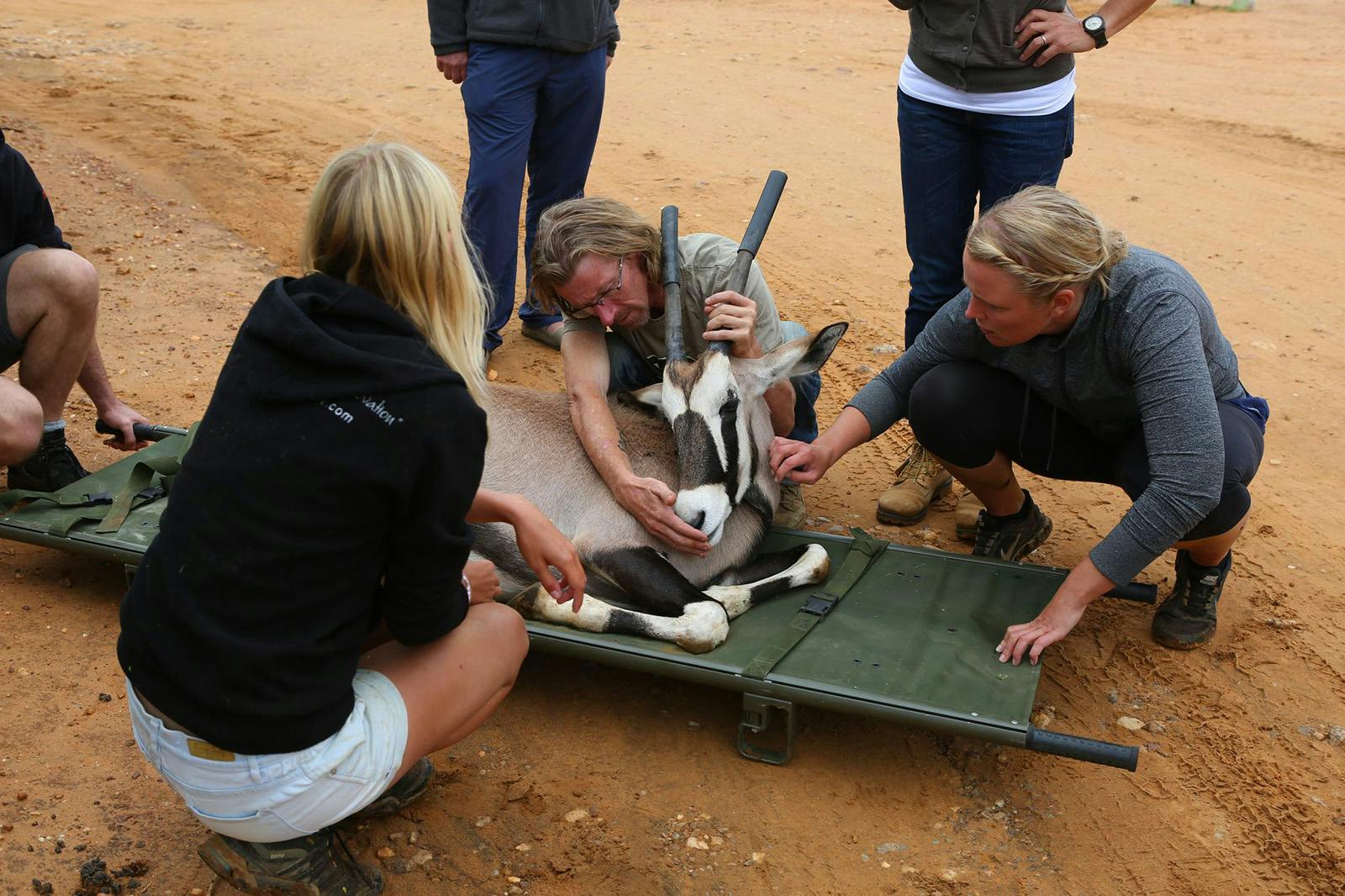
I gained a valuable insight into how people live in Namibia, got to experience wildlife up and close and how they’re being protected. I would 100% recommend this opportunity to others as it is honestly a once in a lifetime experience and something you need to experience in person.
Wildlife Conservation Volunteer Program in Namibia
Purpose
Start dates
Duration
Volunteer hours
Age
Accommodation
Who is going?
Group video calls
Once you have secured your place, join regular video calls to meet your Program Manager and other volunteers before your trip.
This program is ideal for:
Active volunteers who love animals, enjoy being outdoors, and have a desire to contribute towards wildlife conservation efforts in Africa.
Project details
Dreaming of volunteering at a world-famous wildlife conservation organization in Namibia? International Volunteer HQ’s Wildlife Conservation project offers a thrilling opportunity to support the rescue, rehabilitation, and care of African animals, including lions, leopards, cheetahs, antelope, warthogs, baboons, and more. Whenever possible, the goal is to release animals back into the wild while those that are too ill, injured, or habituated find a permanent home at the sanctuary where volunteers play a vital role in their ongoing care.
What to expect and how you'll make an impact
As a Wildlife Conservation volunteer, you’ll be actively involved in caring for animals undergoing rehabilitation and those permanently residing at the sanctuary. You’ll also help maintain and develop the sanctuary, ensuring a safe and enriching environment for its diverse residents. This hands-on experience in African wildlife conservation supports a refuge for orphaned, injured, or conflict-affected animals.
The sanctuary is home to a wide range of species, including lions, leopards, cheetahs, wild dogs, caracals, warthogs, antelope, baboons, birds, small mammals, and farm animals. Volunteers participate in:
- Preparing food and feeding animals, including carnivores
- Providing intensive care for juvenile wildlife
- Observing cheetah physiology and their high-speed runs
- Assisting with habitat construction, fence work, and road maintenance
- Tracking and monitoring high-profile species
- Conducting research on free-roaming carnivores, camera trap data, and GPS tracking
- Taking part in game counts on horseback
- Partaking in “Rhino Rangers Lite” programme activities, including tracking and overnight bush stays
- Responding to conflict calls (if needed)
- General sanctuary maintenance and cleaning
Tasks rotate among volunteers to provide well-rounded experience in animal care, conservation, and site upkeep. Activities vary by season and sanctuary needs, and a moderate level of fitness is recommended.
Why do Wildlife Conservation volunteering in Namibia with IVHQ?
As a wildlife volunteer in Namibia you’ll be adding value to the local community, while also developing personally and professionally by:
- Supporting conservation and wildlife preservation efforts
- Helping care for orphaned and injured animals
- Developing your communication skills
- Gaining a wide range of conservation volunteer experience
- Learning about wildlife and the challenges it faces
- Experiencing life in the African outback
Volunteer requirements
To join this program independently, volunteers must be at least 18 years old.
Those aged 12 to 17 may participate with a parent only, and will be required to provide IVHQ with parental consent in order to participate on the program, and may be asked to provide additional documents to the local team.
Volunteers aged 16 or 17 on their start date, if unable to obtain a criminal background check, can provide two character reference letters instead.
Volunteers must have a moderate level of fitness.
Volunteers aged over 18 on their start date are required to provide a criminal background check to IVHQ before departure.
All volunteers must speak English and have adequate volunteer travel insurance.
Are you eligible to volunteer?
Submit a free application so we can confirm your eligibility and check availability for your preferred dates.
Not sure which program to join?
Get personalized recommendations >
Who is going?
Group video calls
Once you have secured your place, join regular video calls to meet your Program Manager and other volunteers before your trip.
Namibia photo gallery
Academic course credit
Gain course credit from your college or university and meet your academic requirements when completing a volunteer abroad program with International Volunteer HQ!
Learn about course creditLocation
Location
The IVHQ Namibia volunteer program is based at a wildlife sanctuary in the Khomas Region, one of Namibia’s fourteen regions. Conveniently located just a 40-minute drive from Windhoek Airport, the sanctuary offers easy access to the capital while being immersed in nature. Named after the Khomas Highland, this elevated plateau is known for its breathtaking valleys, rugged mountains, and winding riverbeds, making it one of Namibia’s most scenic landscapes. The region’s arid yet diverse ecosystem is home to a rich variety of flora and fauna, including some of Africa’s most iconic wildlife. Its stunning natural surroundings and abundant wildlife make it a prime destination for outdoor activities such as safaris, hiking, camping, and game drives.
Arrival and orientation
The Wildlife Conservation project starts every Monday, with flexible start dates available depending on availability. Volunteers can choose a duration of 2 to 12 weeks.
We ask that you arrive at Windhoek Hosea Kutako (WDH) Airport on your designated Monday start date. Airport pick-up and drop-off are included in your program fee, and the local team can arrange transfers at any time on your arrival and departure days. The sanctuary and volunteer accommodation are approximately a 40-minute drive from the airport.
Orientation is typically held the day after arrival and lasts about two hours, after which volunteer work begins. During orientation, you’ll receive essential information about the sanctuary, including its mission, rules, safety guidelines, and available travel opportunities in Namibia. You’ll also get an introduction to your volunteer tasks and have the chance to meet fellow volunteers.
Volunteer schedule example
First Day
Upon arrival, you will be transferred to your accommodation, where you can relax and settle in for the day. You will also receive instructions for the following day’s activities.
Second Day A local team member will provide an orientation and introduction to the sanctuary. Volunteers will typically begin working later that day.
Weekdays & Saturday
Volunteers participate in two activities per day between 8:00 AM and 5:00 PM. A typical daily schedule includes:
| 7:30 AM | Breakfast at the volunteer camp. |
| 8:00 AM | Morning briefing with the local team, task assignments, and the start of work in the sanctuary. |
| 12:00 PM | Lunch break. |
| 1:30 PM | Afternoon task briefing, followed by work in the sanctuary. |
| 5:00 PM | Volunteers return to camp to clean up before dinner. |
| 7:00 - 7:30 PM | Dinner at the volunteer camp. On Saturday evenings, enjoy a traditional braai (barbecue). |
Sunday
On Sundays, a small group of volunteers will assist with animal food preparation and feeding in the morning, while the rest of the team enjoys the day off. Volunteers can take the opportunity to explore the sanctuary, unwind by the pool, or join an optional city tour of Windhoek for a small fee, organized by the sanctuary.
Please note that the schedule may occasionally change due to weather, public or school holidays, or other unforeseen events that could affect your placement. We recommend checking in advance whether your intended travel dates coincide with any public or school holidays.
Accommodation and WiFi
Volunteers live and work at the sanctuary, staying in gender-segregated semi-permanent tents at one of two campsites. Tents accommodate up to three people (twin or triple share), with twin-share available for couples.
Communal showers and toilets are separate from the tents, with hot water provided by solar energy though cold showers may be necessary at times. Winters (May–September) can be chilly, so bringing a sleeping bag and warm layers is recommended. Laundry services are provided free of charge.
Wi-Fi is available in communal dining areas but not at the tents. For better connectivity, volunteers should purchase an e-SIM or SIM card at the airport.
Private tents or nearby lodge upgrades are available at an additional cost, subject to availability. Extra nights before or after the program can also be arranged for a small fee.
Meals
Volunteers receive three meals daily. Breakfast is self-serve with cereals, fruit, yogurt, toast, spreads, tea, coffee, and milk. Lunch varies from wraps and salads to hot meals like pasta and sandwiches. Dinners are typically hearty, including BBQ (braai), stews, and chicken dishes.
Special dietary requests can be accommodated, please mention them in your application. Volunteers can also buy personal groceries and snacks in Windhoek upon arrival before heading to the sanctuary.
Pricing
Spots are limited. For a Registration Fee of just US$329 (approximately $329) you secure your spot and unlock all our preparation and training tools.
You don't need to worry about paying your Program Fee until you get closer to your start date.
|
Duration
|
Program Fee
Due 30 days before you start, or within 48 hours if you register inside of 30 days. Covers the cost of hosting you.
|
|---|---|
| 2 weeks | $1,206 Equivalent to $86/day |
| 3 weeks | $1,774 Equivalent to $84/day |
| 4 weeks | $2,342 Equivalent to $84/day |
| 5 weeks | $2,910 Equivalent to $83/day |
| 6 weeks | $3,478 Equivalent to $83/day |
| 8 weeks | $4,297 Equivalent to $77/day |
| 10 weeks | $5,035 Equivalent to $72/day |
| 12 weeks | $5,839 Equivalent to $70/day |
- All programs attract a Registration Fee of US$329 (approximately $329) in addition to the Program Fee. This covers all pre-departure support services.
- A 5% international banking fee is added at point of payment.
- Recommended spending money: Volunteers in Namibia generally find US$50 per week to be sufficient for expenses.
- Breakfast, lunch and dinner
- Airport pick-up and drop-off
- Donation to sanctuary
- Uniform (one pair of pants and one shirt)
- Accommodation
- 24/7 in-country emergency support
- In-country program orientation
- Pre-departure support from your Program Manager
- Personalized preparation tools, guides and check lists
- Access to IVHQ’s preferred insurance and flights partners
- Comprehensive in-country day to day support and guidance
- Discounts on travel and tour add-ons
- Certificate of International Volunteer Service
Learn more about what's included in your IVHQ Registration Fee and Program Fee.
- Visa, flights, vaccinations, criminal background check.
- Flights
- Visa (if required), travel insurance (mandatory), vaccinations, criminal background check.
- Personal spending money for snacks, laundry, public transportation, drinks and leisure activities during your free time.
Popular add-ons & experiences in Namibia
Take your volunteer experience to the next level with these popular add-ons and experiences. Explore your options below and learn how to book them once you've been accepted onto the IVHQ Namibia program.
Swap one week at the Wildlife Conservation Sanctuary for an unforgettable week on the coast!
Exchange one week on the Wildlife Conservation project at the sanctuary for this exciting project!
Swap a week at the sanctuary for this unique project and broaden your impact!
Check what's required to visit Namibia
Entry requirements can change at any time, so it's important you monitor this right up until you depart for your trip.
Safety and support
Safety and support
IVHQ follows best practice and industry-leading health and safety procedures, which are regularly reviewed and optimized as part of the B Corporation recertification.
- All volunteers encouraged to complete our interactive pre-departure training.
- All local teams trained on best practice volunteer management & First Aid.
- All IVHQ programs are required to adhere to IVHQ's Risk Management Policy.
- All volunteers have access to 24/7 in-country support from our local team.
Essential country information
| Capital | Windhoek |
| Population | 2,567,012 |
| Languages | English, Oshiwambo |
| Currency | Namibian Dollar |
| Time zone | UTC+02:00 |
Weather and climate
Namibia has a typically subtropical desert climate. The summers are hot and partly cloudy and the winters are short, cool, dry, windy, and clear. Over the course of the year, the temperature typically varies from 46°F to 87°F and is rarely below 39°F or above 95°F. The hot season lasts for almost 4 months, from early October to the beginning of February and the cool season lasts for 2.5 months, from late May to early August. The coolest month is July, and volunteers taking part over the cool season will need to keep this in mind and bring warmer clothing, especially for early mornings and evenings at the accommodation.
What recent volunteers said about their IVHQ experience
I discovered a new country and new culture. It was really really extraordinary experience we did as a family.
The accommodation was simple, but comfortable and nice, hidden in the bush in the middle of animals. Just perfect!
Nice discovery for all of us and happy to see the country through volunteering. Don’t be only a visitor but a participant for causes that needs support.
This was my very first volunteer experience. IVHQ made me feel safe and prepared from the very start of my process all the way until I got home. IVHQ provided all of the training guides, video chats, and was very easy to get in touch with if you had any questions or concerns.
The local team was absolutely phenomenal! From the moment we arrived, they greeted us like family and did everything they could to make sure the needs of every single volunteer was met. It didn't matter if there was 5 or 500 people. They truly valued every single person.
I thought the food was very good. We did tend to repeat meals from week to week, but cooking for that many people does put a bit of a limit on what you can cook. The accommodations were exactly how they were described. Yes it was cold, but the staff made sure you had hot water bottles and plenty of blankets.
I was at the project for four weeks. I was able to travel around to a couple of the other projects as well. It makes you feel good that no matter where you go, you are always making a difference somewhere and learning how to keep making a difference. I felt like just the knowledge alone changed how I viewed the world and what I should be doing to keep up with my part.
There was so much to learn and gain from this experience. You learn not only about the culture, but about yourself as well. The friends you will meet will become your besties almost instantly. I could not recommend this program enough.
I gained an understanding of what wildlife conservation means and how this differs from person to person. Everyone is welcoming and friendly whether you are travelling by yourself or with others. There was a wonderful age group from 16 to 60 who were there and therefore, no matter your age, you will always have the ability to be involved in volunteer efforts.
To read all reviews, visit our reviews page.
Latest blog posts
Other projects you may be interested in