Brazil map
Other programmes
Photo gallery

Volunteer in Brazil with International Volunteer HQ today. IVHQ’s local staff in Brazil require volunteers NOW! IVHQ Brazil has a wide range of volunteering opportunities projects in Brazil, including Working with Children, Brazil Sports Program, Carnaval Program, Teaching English, Building Homes in Favelas and Community Development.

LOCATION OF BRAZIL VOLUNTEER PROGRAM

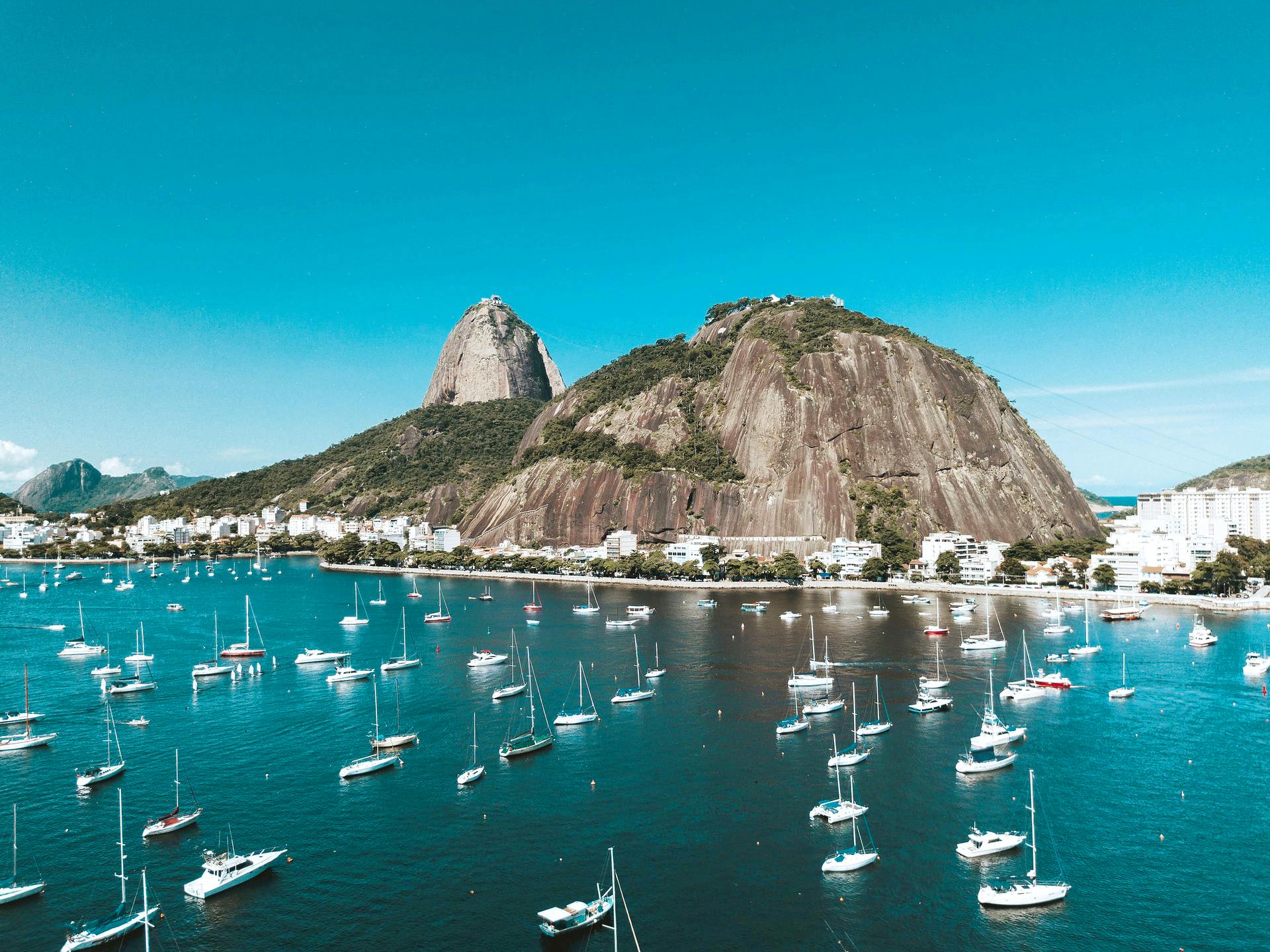
IVHQ has volunteer placements located in Rio de Janeiro. Rio de Janeiro is the second largest city of Brazil, located on the coast in the South East of the country.

START AND DURATION OF BRAZIL VOLUNTEER PROGRAM

Programs begin on the 1st and 3rd Sunday of each month. Volunteers can choose to volunteer for periods ranging from 2 weeks to 6 months. Please note, Teaching English and Community Development projects have a minimum duration of 3 weeks.

BRAZIL VOLUNTEER REQUIREMENTS

Volunteers must be 18 years or older at the beginning of the program and have at least a high school education. All volunteers must provide a criminal background check to IVHQ partner staff on arrival in Brazil. 

HOW MANY OTHER VOLUNTEERS WILL THERE BE?

Last year over 300 volunteers were placed on our Brazil program, making us one of the most popular volunteer organizations in Brazil! Between 20 and 40 volunteers start on our programs in Brazil each month. What does this mean for you? More people to socialize with and travel with, more people to meet from different cultures, more people to volunteer with, more projects to work on, more staff support, better infrastructure for volunteers and lower fees!  
 

BRAZIL VOLUNTEER TESTIMONIALS

"Volunteering on the Carnaval Program was the best thing I have ever done, I was thrilled to be able to help with the costumes and gain some friends from the favellas in Rio. You get a true understanding of how life is and their culture. I would definitely do it again." - Laura Shafer (Carnaval Program)
 
Click here to read more testimonials from IVHQ volunteers in Brazil.
 

BRAZILIAN CARNAVAL

Carnaval is an annual festival in Brazil held 46 days before Easter. In Rio de Janeiro, huge street festivals (blocos) are held, huge parades are led by samba schools and the Carioca's (people from Rio de Janeiro) shut down for the week and go into party mode. Famous throughout the world, tourists flock into Rio de Janeiro over Carnaval and accommodation prices go through the roof. For our volunteer program this means there is a surcharge of R750 that  volunteers who are volunteering on the program during Carnaval week are required to pay (collected in country before Carnaval week by local staff). This surcharge is required to cover accommodation surcharges enforced by local landlords. Exact Carnaval days vary from year to year and in 2014 it runs from 28th February to 4th March.
 

FOOTBALL WORLD CUP 2014

In 2014, the Football World Cup will be held in Brazil with Rio de Janeiro hosting many of the games. This is great but unfortunately due to accommodation issues, we will not have accommodation for volunteers between May 31st 2014 and July 20th 2014. This means between these two dates the program will be closed and we will not be hosting volunteers.

BRAZIL VOLUNTEER PROJECT DESCRIPTIONS

BRAZIL SPORTS PROGRAM

Project example

Volunteer in Brazil

Brazil Sports Project Example: Surf Gloria

In this project volunteers get to enjoy the beautiful Brazilian beaches that Rio is famous for, whilst volunteering. The main goal of the placement is to assist youth from low income communities (favelas) by making surfing accessible to all and awakening their interest for this healthy and enjoyable sport.
Read more »

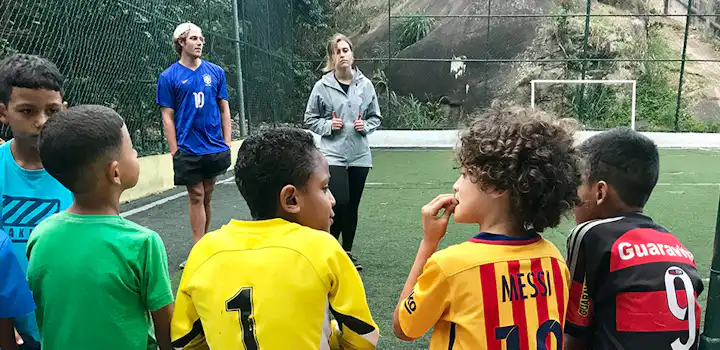
Sport has become vital for Rio's lowest income communities, as they provide children and adolescents with recreational outlets. At just about every corner of Rio de Janeiro, you will find the locals playing Brazil's national sport, futebol. Sports have become an essential part of favela life, especially for children and adolescents because there are so few entertainment options for youth in low income communities. With a lack of entertainment and job options, children more and more are getting caught up in illegal activities to pass the time. The sports volunteer program has become a vital outlet for children; it provides them with friendly competition in a safe and fun environment. By no means do you have to be a sports star to participate in the sports programs, but a little talent goes a long way! Our sports projects include popular programs such as football, beach volleyball capoeira and surfing. Volunteers are encouraged to list their preferences and skills but will be required to be flexible and participate in any variety of the above sports. You are especially encouraged to take the initiative to teach lesser-known sports such as baseball, American football or basketball! Please note that many of the sports programs are outdoors and dependent on good weather. In this event we will do our best to place volunteers who are unable to attend their project due to bad weather to help out at other projects such as working with children and community development. 

Project example

Volunteer in Brazil

Community Development Example: Horta Comunitario da Coroa

Projecto Horta is an environmental program as part of the community development project that maintains gardens in favelas (urban slums) around Rio.
Read more »

WORKING WITH CHILDREN

Project example

Volunteer in Brazil

Working with Children Project Example: CCI - Centro de Convivencia Infantil

CCI, located in the community Vila Kennedy, has been working with children and teenagers for the last five years. Currently they work with 179 children from 3-18 years and offer them fundamental skills which will help them to better integrate into Brazilian society.
Read more »

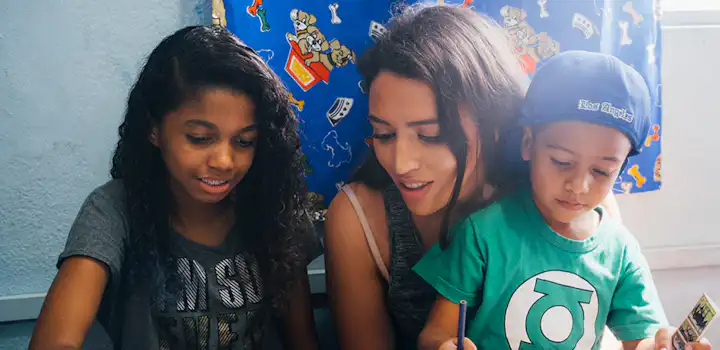
Helping in child development is undoubtedly the most beneficial way to increase the quality of life in children living in Brazil; a country with one of the most pronounced wealth gaps in the world. Children in Rio attend school either in the morning or the afternoon – leaving them unsupervised for long periods of time if their parents work. The working with children program ensures that children have a safe, educational, supervised environment in which to spend this time constructively and allow parents to work. As a part of the program, your objective is to provide children with the care and attention needed to develop their social skills, to encourage them to develop an enthusiasm for higher education, and to teach vital skills to be competitive in a rapidly developing economy. Work in this program ranges from community creches with babies right through to community centers for children and teens. As a volunteer in this program, you will work with children from favelas, providing them with the essential attention, support and guidance needed for healthy child development. Volunteers, although not conducting strict written lessons, will also teach English though educational play such as copying, tracing, games, drawing and role play. Child development projects require volunteers who are dedicated and willing to give a lot of care and love. These projects generally have few resources, so you must have a lot of initiative and creativity with the facilities that are available to you.

CARNAVAL PROGRAM (OCTOBER 2013 TO FEBRUARY 2014)

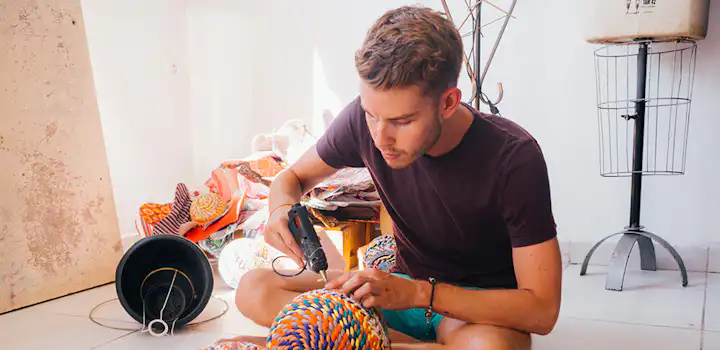
Carnaval is an event that breaks all economic and social boundaries – a love and passion for Samba makes everyone equal. The Carnaval Program allows volunteers to get involved in the preparation and hard work that goes into one of the biggest parties on the face of the earth! Samba schools competing in Carnaval have a full year of intense work to prepare the many floats, costumes, music and dances. Samba schools are born from the local favelas (urban slums) and most of the schools take their names from the community they represent. Each school unifies and proudly represents people from that community, and all Cariocas (Rio-born Brazilians) also have their favorite school. Volunteers help some of the leading samba schools in the preparation of costumes or decoration of the floats – you don't need any special skills, just a willingness to work hard. Whilst you are hard at work you can also engage in some Portuguese and English language exchange with your fellow workers. There are many large warehouses available where each school of the Special Group (the best schools) has the space to build and store their floats and work on their costumes. Volunteers are also welcome to go to the rehearsals at the Samba school to see the amazing samba dancers, hear the bateria (drum group) and hopefully learn some new moves. NB The dates for Carnaval change every year (it is held 46 days before Easter). Volunteers do not get to participate in the Carnaval parade for free; this is an extra and needs to be arranged separately in country with the local staff.

Project example

Volunteer in Brazil

Community Development Project Example: Ballet de Santa Teresa

The Santa Teresa Ballet is a program directed at children and youth who live in areas of social risk and it aims to complement a child's academic progress through artistic expression.
Read more »

TEACHING ENGLISH

Project example

Volunteer in Brazil

Teaching English Project Example: Cultural and Social Centre Tatiane Lima

Founded in 2005, CSC Tatiane Lima is a non-profit organization that has been promoting activities close to underprivileged communities in "Realengo" neighborhood.
Read more »

As an English teacher, you will also be exposing your students to one of the world's most commonly spoken languages, one that fuels the global economy. In the next few years Brazil will play host to both the World Cup and the Olympics - these events hold many opportunities for English-speaking Brazilians to find work in the tourism industry and give them a skill they can use for life! You will be working side-by-side with your students, sharing perspective and encouraging cultural understanding. Students range in age from primary school age to the elderly - but no matter who sits in your classroom, teaching English is bound to be an extraordinarily fulfilling experience. English instruction in Brazilian government schools is flaky at best, so volunteering to teach English will provide young students with a supplement to what they learn in school and will give people who never took English courses the opportunity to learn the language. It is also an excellent opportunity to give those living in the favelas a chance to have access to the language that fuels the global economy enhancing their work prospects. The English teaching placements are flexible - from tutoring a few students, to teaching an entire class. Volunteers also often help each other in planning lessons and activities - but the simple fact that there is an English speaker leading discussion makes a tremendous impact on language acquisition. NB Volunteers DO NOT need to be a qualified or experienced teacher. This program has a minimum requirement of 3 weeks

COMMUNITY DEVELOPMENT

Project example

Volunteer in Brazil

Community Development Project Example: Spectaculu

Spectaculu is an organization that offers children and youth from low-income communities in Rio de Janeiro the chance to complement regular scholastic education with artistic, cultural, and professional development during their formative years.
Read more »

There's no doubt that local organizations in Brazil are making significant impacts in their communities but with your help and creativity, their programs could develop even further - making them markedly more sustainable and impacting. Volunteer opportunities in community development range from helping partner organizations to create new community development programs, develop existing ones, becoming involved in Arts projects (such as Santa Teresa ballet school), helping create community garden projects, make performance indicators, and work in outreach and promotion. The local organizations volunteers work in provide essential resources and programming to their communities, but staff members are often swamped by day-to-day operations and have little time to focus on the "big picture." As a volunteer, you will have the opportunity to help them accomplish objectives that they may have not otherwise had the time or the manpower to achieve without you. The time commitment and reach of your work is largely up to you, but creative and industrious go-getter types are always needed for this kind of role. Projects include health education and awareness; technology, arts projects, environmental and garden programs, media and design as well as NGO development. NB This program has a minimum requirement of 3 weeks.

BUILDING HOMES IN A FAVELA

Project example

Volunteer in Brazil

Barriera do Vasco Favela

In the favela community of Barriera do Vasco there is an area nicknamed "Uga-Uga" where families of sometimes 10 people are living in a hut made from scraps of plywood and canvas, there is a desperate need for eather proof houses. Some current "homes" do not have a kitchen or bathroom area and these tiny unstable constructions let in the wind and especially the rain. Without protection from the elements children and elderly people suffer from being exposed to constant dampness and get sick as a consequence. Volunteers on the IVHQ Building program assist a site foreman with building new homes for people in these communities.

In the favela community of Barriera do Vasco there is an area nicknamed ´Uga-Uga` where families of sometimes 10 people are living in a hut made from scraps of plywood and canvas, there is a desperate need for weather proof houses. Some current "homes" do not have a kitchen or bathroom area and these tiny unstable constructions let in the wind and especially the rain. Without protection from the elements children and elderly people suffer from being exposed to constant dampness and get sick as a consequence. Volunteers on the IVHQ Building program assist a site foreman with building new homes for people in these communities. As a volunteer you help to construct a simple, small yet comfortable and safe brick house for these families. The brick house includes an area to sleep that also functions as the living area, a kitchen area and a separate bathroom. It also includes a roof top that can be used as a functional area – where the family can dry clothes and where children can play. You DO NOT need any special skills to participate in this program just a willingness to participate in some hands on physical work. There is a professional builder to supervise and give you directions. NB There is a surcharge of US$150 per week on this program to cover construction materials and employment of a site foreman. This will be quoted in your program fees when you apply.

BRAZIL PROGRAM COSTS

One of the strengths of IVHQ is our extremely affordable fees. Click here to see the program cost to volunteer in Brazil and what you receive in exchange for your fees.

ACCOMMODATION AND MEALS

In Brazil volunteers stay in a volunteer house with other volunteers. The volunteer house is very safe and secure. Volunteers can expect to share a room with two or three other volunteers. Bedding and pillows are provided while staying in the volunteer house but it is recommended that volunteers bring their own sleeping bag for any trips away. Breakfast is provided at the house but volunteers must arrange their own lunch and dinner. The volunteer house has facilities for this and there are also shops nearby to purchase what you may need. There are also numerous restaurants close to the house. Bottled water is readily available in Brazil and volunteers should budget approximately US$5 per week for this (2 litres per day). Tap water is drinkable but not recommended due to the fact that it has a lot of chlorine in it – brushing your teeth is fine. Breakfasts generally consist of tea or coffee toast, local breads, cereal, fruit and condiments. If you have special eating needs for breakfast, please let us know ahead of time so that we can make arrangements for you. However, we need to stress the point that you should not expect to eat as you normally do at home. We will do our best to see that you are well taken care of, but also as a volunteer, there is a need to be flexible.

ORIENTATION

Orientation will begin on the first morning of your volunteer placement. Orientation will be conducted by our team in Brazil and cover everything you need to know for your volunteering placement in Brazil – Introduction to Brazil, Brazilian Customs, Language Training Details, Rules and Expectations, Safety, Travel Opportunities in Brazil, Introduction to your project and placement. The orientation will also give you a chance to meet other volunteers and swap contact details for weekend travel and socializing. Once orientation is complete, volunteers will be transported to their program and introduced to all relevant parties and program placement staff.

VOLUNTEER WEEK

First Day: On the first day of the volunteering placement, the volunteers will be escorted to the project by either a member of the program staff and introduced to the staff at the project you will be working with.

Weekdays: While our programs are flexible and can be fitted to your requirements, a typical day is as follows.

  • 7.30AM Breakfast with other volunteers at the volunteer house
  • 8.00AM Volunteer leaves home and travels (or walks) to the project. In many cases volunteers take public transport to their projects with other volunteers and local staff. Expect to budget US$3-10 for this per day.
  • The volunteer joins with the local staff. You will be given a duty roster and a plan for your work. There is usually a tea break and a lunch break. Work and hours is dependent on the project and location that the volunteer is participating in.
  • 2.00PM-5.00PM Work at the project usually ends. The volunteer at this point is free to visit and see places or do shopping. If volunteers are taking a Portuguese language course they will usually do this in the afternoons and this generally takes 2-3 hours.
  • 6.00PM Volunteers usually return home to start dinner or other evening plans at the volunteer house

Weekends: During the weekend, volunteers have spare time and usually just relax or take the opportunity to explore other parts of Rio de Janeiro and Brazil. Long weekends can be taken to travel further afield.

Brazil Volunteer Program Fees

Volunteer Period   Program Fee US$  
2 Weeks   620  
3 Weeks   820  
1 Month (4 weeks)   1030  
6 weeks   1340  
2 Months (8 weeks)   1590  
10 Weeks   1850  
3 Months (12 weeks)   2090  
4 Months (16 weeks)   2580  
5 Months (20 weeks)   3050  
6 Months (24 weeks)   3530  

To convert these prices to your local currency click here.
Please note: All programs attract a Registration Fee of $249 USD on top of the Program Fee. If your program runs over Carnaval week (2013 - 8th February to 12th February and 2014 - 28th February to 4th March) you will need to pay an accommodation surcharge of R750 for the week. This will be collected in country by local staff. The Building Homes in Favelas project attracts a surcharge of US$150 per week to cover site foremen and materials

What do my fees pay for?

Registration Fee (Refundable if you choose not to go*) – 24/7 support from IVHQ staff, program marketing costs, information pack, administration costs, travel costs to inspect programs and communication costs with volunteers.
Program Fee – Airport pick up, orientation, program supervision, accommodation and breakfasts during volunteer placement period, In-country 24/7 volunteer support and In-country administration costs.

What additional costs will I have?

Visa, flights, travel insurance (mandatory), vaccinations, Portuguese lessons, souvenirs, trips or tours you do while in the country, transfer back to the airport from program, transport to placements, money for meals (lunch and dinner), spending money (volunteers in Brazil generally find US$120 to be sufficient for basic weekly expenses).